

For centuries, businesses have sought the elusive formula for success, often falling short. But what if there truly existed a proven blueprint for transformative growth?
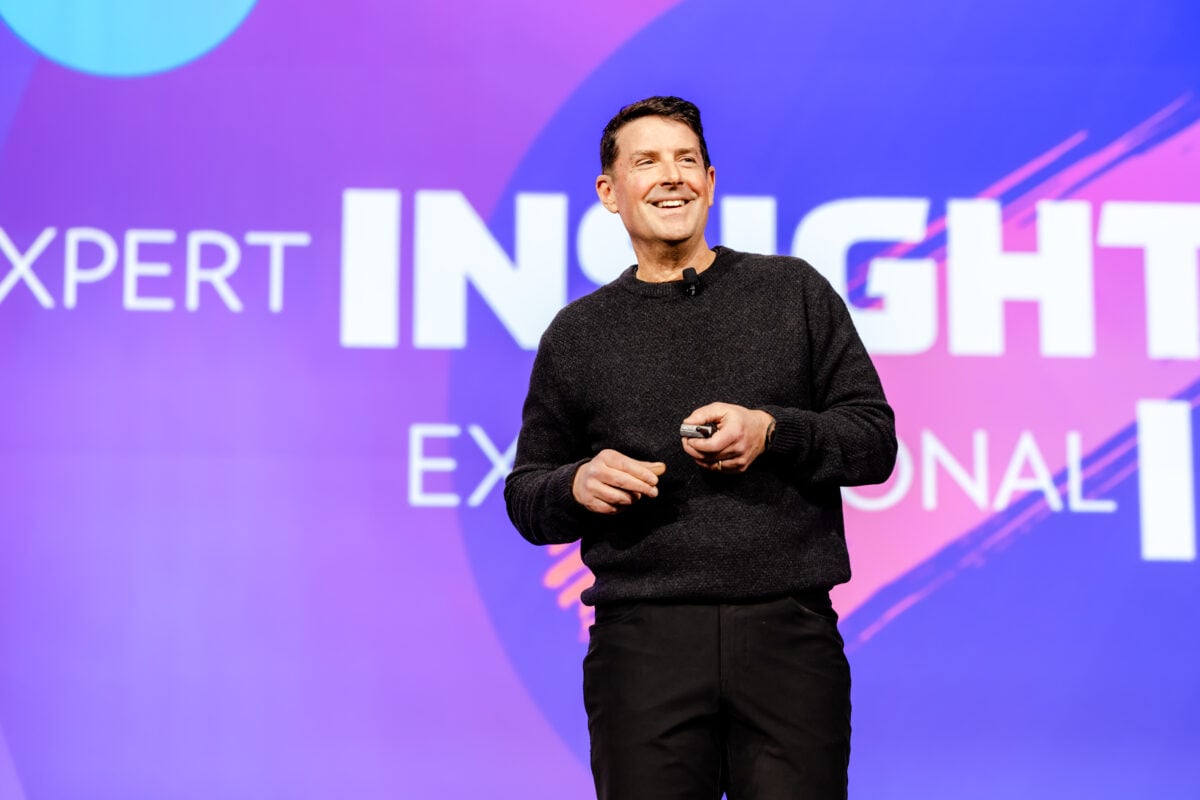
Jon McNeill, CEO of DVx Ventures, (Former President of Tesla and Former Lyft COO) has unlocked this secret through his groundbreaking “algorithm for success,” a methodology that has driven exponential innovation and scaling at Tesla and SpaceX, which he shared in this morning’s Opening Keynote session.
HIMSS26 ends March 12! If you missed your chance to attend, sign up for updates on HIMSS27.
In this compelling session, McNeill draws from his firsthand experiences leading Tesla through a period of explosive growth to reveal the practical steps behind this algorithm.
Mastering Both Innovation and Scaling
In this compelling session, McNeill draws from his firsthand experiences leading Tesla through a period of explosive growth to reveal the practical steps behind this algorithm. With real-world examples, he demonstrates how organizations across industries can leverage this framework to accelerate innovation, simplify processes, and achieve unprecedented results.
The Proven Formula For Success
Step 1: Question Every Requirement – and Ask Why
- Relentlessly question every requirement, even if it challenges established norms or offends colleagues.
- Use the “5 Whys” method to uncover the root cause of problems and identify unnecessary constraints.
- Example: At Tesla, questioning the CAD design assumptions revealed a critical flaw in the Model X doors, leading to a solution that saved the company.
Step 2: Delete Every Possible Step in a Process
- Identify and eliminate steps that do not add economic value or are not required by law, safety, or physics.
- Aggressively cut steps until you need to add back 10%—this ensures deep simplification.
- Example: Tesla reduced unnecessary steps in financing, simplifying loan documents from 12 pages to one paragraph, enabling a one-click loan process.
Step 3: Simplify and Optimize
- Simplification is the foundation of innovation; complexity is often a result of accumulated decisions.
- Map out processes manually, using tools like sticky notes, to visualize and streamline workflows.
- Example: Tesla simplified its factory operations by replacing robotic body shops with aluminum casting, cutting costs and factory size by 50%.
Step 4: Accelerate Cycle Time
- Speeding up processes reveals inefficiencies and enables higher quality and lower costs.
- Challenge the “good, fast, or cheap—pick two” mindset; achieving all three is possible.
- Example: Lululemon reduced its design-to-production cycle from 60 weeks to six weeks for the Olympics by suspending rules and optimizing workflows.
Step 5: Automate Last
- Automate only after fully understanding and optimizing the process manually.
- Automating flawed processes locks inefficiencies into place and makes them harder to change.
- Example: Tesla’s Model 3 production initially failed due to premature automation, but manual assembly in a tent saved the company and inspired new factory designs.
Secret Ingredients of Success
Ingredient 1: Expand the Definition of Your Product to the Customer’s Entire Experience
- Consider the customer’s full journey, not just the core product.
- Example: Tesla recognized that charging infrastructure is part of the EV experience, unlike traditional automakers who focused solely on the car.
Ingredient 2: Inject Urgency & Accountability
- Focus leadership on existential issues with weekly progress reviews to drive urgency and accountability.
- Example: Elon Musk dedicates one day per week to each company, reviewing advancements on critical issues, creating compounding advantages.
Ingredient 3: Use Your Product (“Eat Your Own Dog Food”)
- Leaders should personally use their products to identify pain points and provide feedback.
- Example: Executives at Tesla drove cars off the production line daily to test and improve them, while GM executives tested EV charging experiences firsthand.