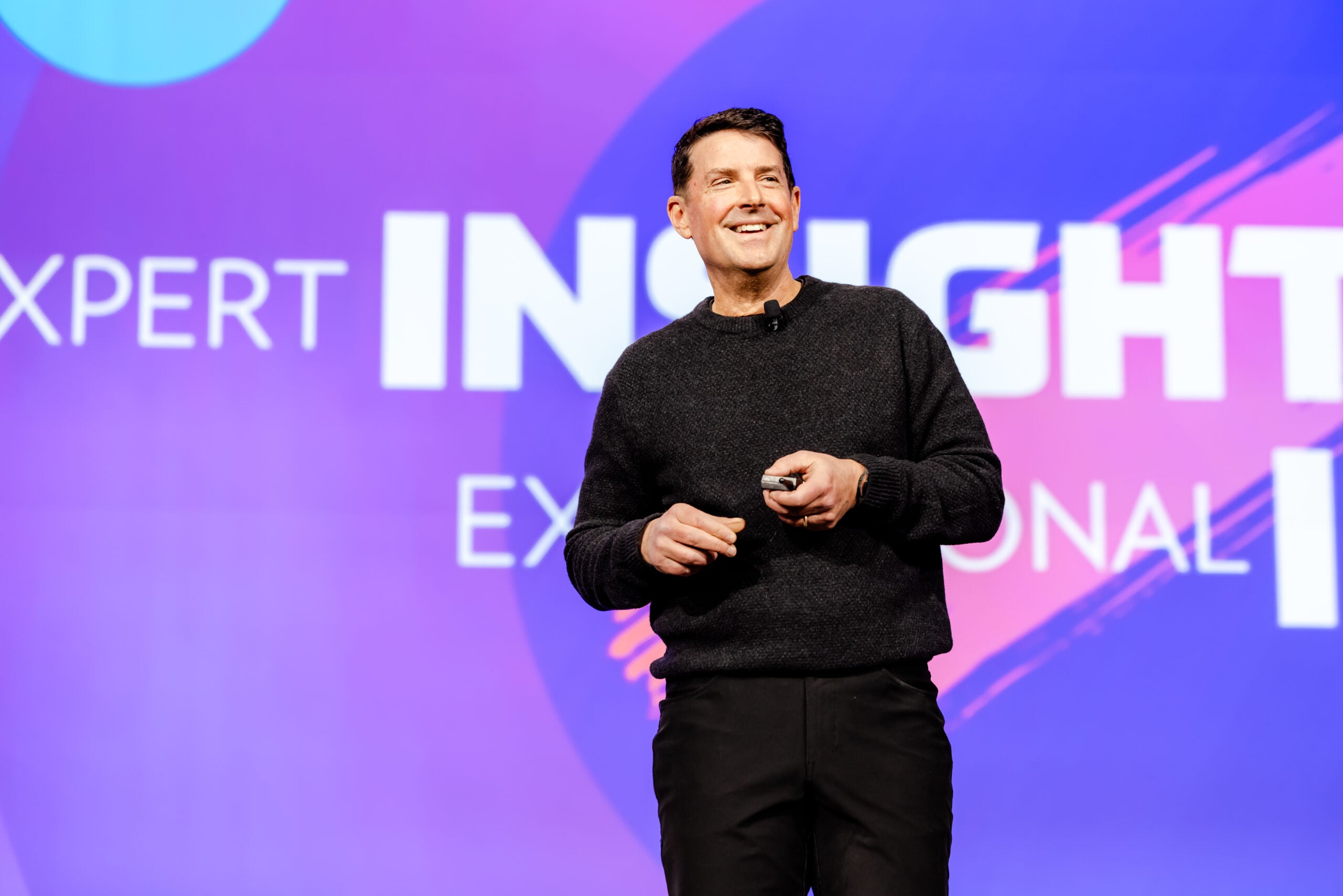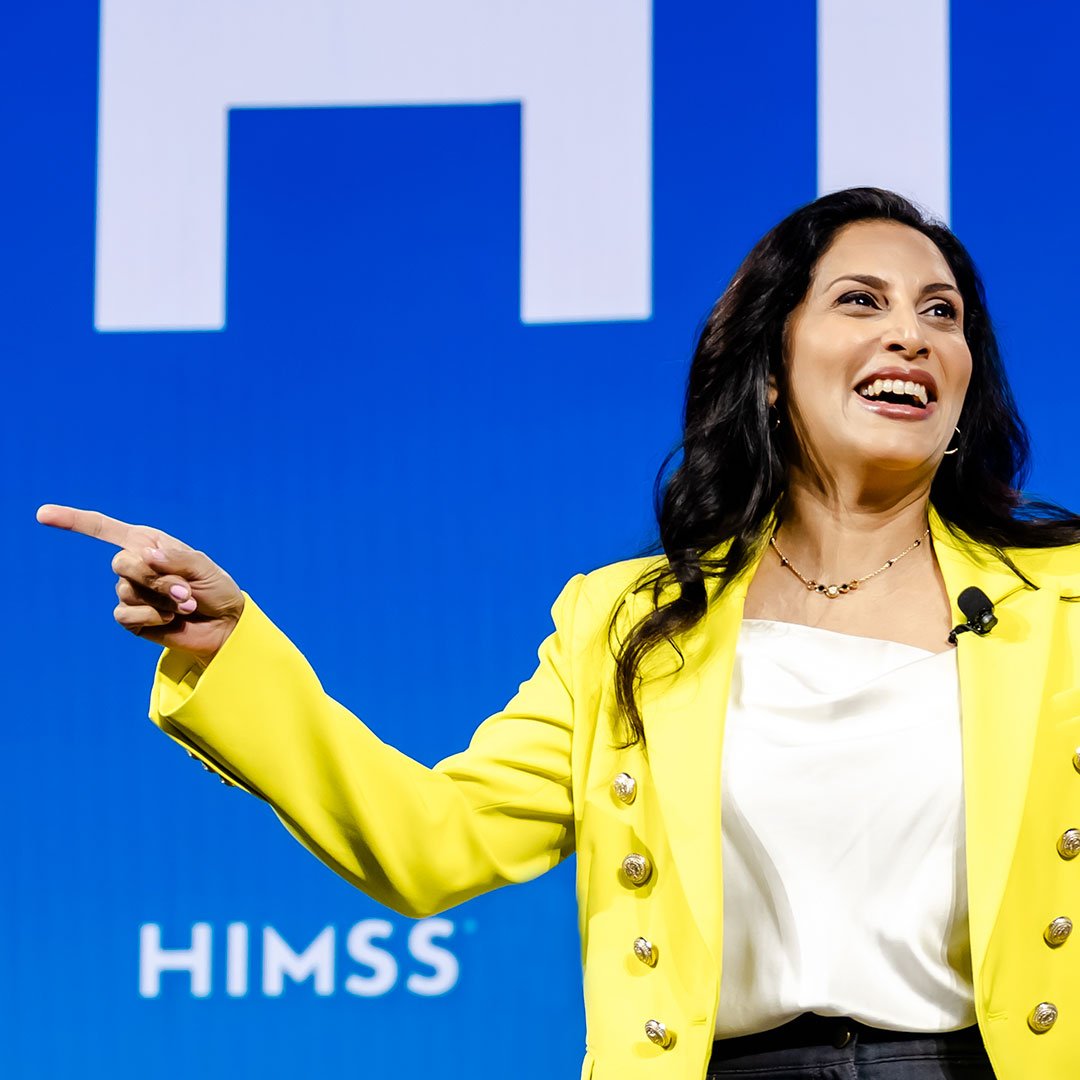
Day two of HIMSS26 was kicked off by a session moderated by Dr. Ami Bhatt (Chief Innovation Officer at the American College of Cardiology), in which Dr. Sumbul Ahmad Desai (Vice President of Health and Fitness at Apple) unpacked her vision for the future of healthcare.
Her insights highlighted how technology, particularly wearables, artificial intelligence (AI), and collaborative innovation, is reshaping the healthcare landscape. Below, we explore the key themes from her discussion, Scientific Excellence Meets Digital Innovation: Human-Centered Healthcare.
HIMSS26 ends March 12! If you missed your chance to attend, sign up for updates on HIMSS27.

"You should never leverage technology for technology's sake - it has to solve a problem."
The Wearable Watch
The Apple Watch has evolved from a simple fitness tracker to a sophisticated health monitoring device. Initially designed with a heart rate sensor to improve calorie measurement accuracy, the wearable has quickly become a tool for detecting potential health issues. Dr. Desai shared how users began reporting elevated heart rates, leading to diagnoses of conditions like atrial fibrillation – feedback which inspired Apple to develop and roll-out features like high heart rate notifications and ECG capabilities.
The wearable watch empowers users by providing continuous health data, enabling early detection of potential issues. It’s not just about episodic care; it’s about creating a continuous stream of actionable insights. As Dr. Desai emphasized, the Apple Watch is designed to help individuals understand their personal health baselines and trajectories, fostering a proactive approach to wellness.
Increasing Patient Autonomy
A central theme of Dr. Desai’s keynote was the importance of empowering patients to take control of their own health. In light of this, Apple’s approach focuses on putting more power in the hands of users, enabling them to ask the right questions and engage meaningfully with their healthcare providers. Features like physician-designed reports ensure that patients can have informed conversations with their doctors, strengthening the patient-provider relationship.
Dr. Desai highlighted the importance of designing technology that not only provides insights but also facilitates better communication between patients and clinicians. By reducing false positives and unnecessary medical visits, Apple aims to streamline healthcare interactions and improve outcomes. Ultimately, this approach underscores the belief that engaged patients are more likely to achieve better long-term health results.
The Intersection Between AI and Health
Artificial intelligence is poised to play a transformative role in healthcare, and Apple is already leveraging AI and advanced machine learning in its products. From heart condition monitoring to hearing and movement health, AI is embedded in many of the company’s product features. Dr. Desai noted that AI’s potential extends beyond individual insights to multimodal signal processing, which could unlock new ways to detect and manage health conditions.
However, she stressed the importance of clinical rigor and validation when integrating AI into healthcare. In light of that, she says, Apple’s philosophy prioritizes accuracy, privacy, and actionable insights, ensuring that AI-driven features provide meaningful value without adding noise or confusion. Collaboration with healthcare systems and researchers is key to establishing guardrails and validation methods for AI applications in health.
How Can Companies Build and Scale Collaboration?
Dr. Desai emphasized the importance of partnerships in driving healthcare innovation. Apple collaborates with healthcare systems, providers, and researchers to develop solutions that address real-world challenges. For example, the partnership with Emory Hospital demonstrated how Apple’s technology could be integrated into daily operations to enhance patient care and streamline workflows.
She also highlighted the need for companies to focus on solving problems rather than forcing technology into healthcare. Successful collaboration requires peeling back the layers to understand operational, clinical, and technological needs. By working together, healthcare systems and technology companies can create solutions that are greater than the sum of their parts.
What’s Next?
Looking ahead, Dr. Desai shared her vision for the future of healthcare technology. According to this, Apple aims to empower individuals, providers, and health systems with seamless, actionable insights across its ecosystem. The focus is on driving preventative and proactive care, enabling people to live healthier lives.
Emerging technologies like spatial computing and advanced displays are opening new possibilities for healthcare. For instance, Apple’s Studio Display XDR introduces DICOM medical imaging presets, allowing radiologists to view diagnostic images directly on the display. Spatial computing is being explored for applications in surgical planning, patient education, and imaging-guided procedures.
Dr. Desai concluded her session by emphasizing the importance of creating delightful healthcare experiences. Whether it’s through wearables, AI, or new technologies, the goal is to make health a continuous part of daily life, not just something addressed during illness. By focusing on innovation, collaboration, and patient empowerment, Apple is shaping a future where high-quality care is accessible to all.
She also highlighted the need for companies to focus on solving problems rather than forcing technology into healthcare. Successful collaboration requires peeling back the layers to understand operational, clinical, and technological needs. By working together, healthcare systems and technology companies can create solutions that are greater than the sum of their parts.